
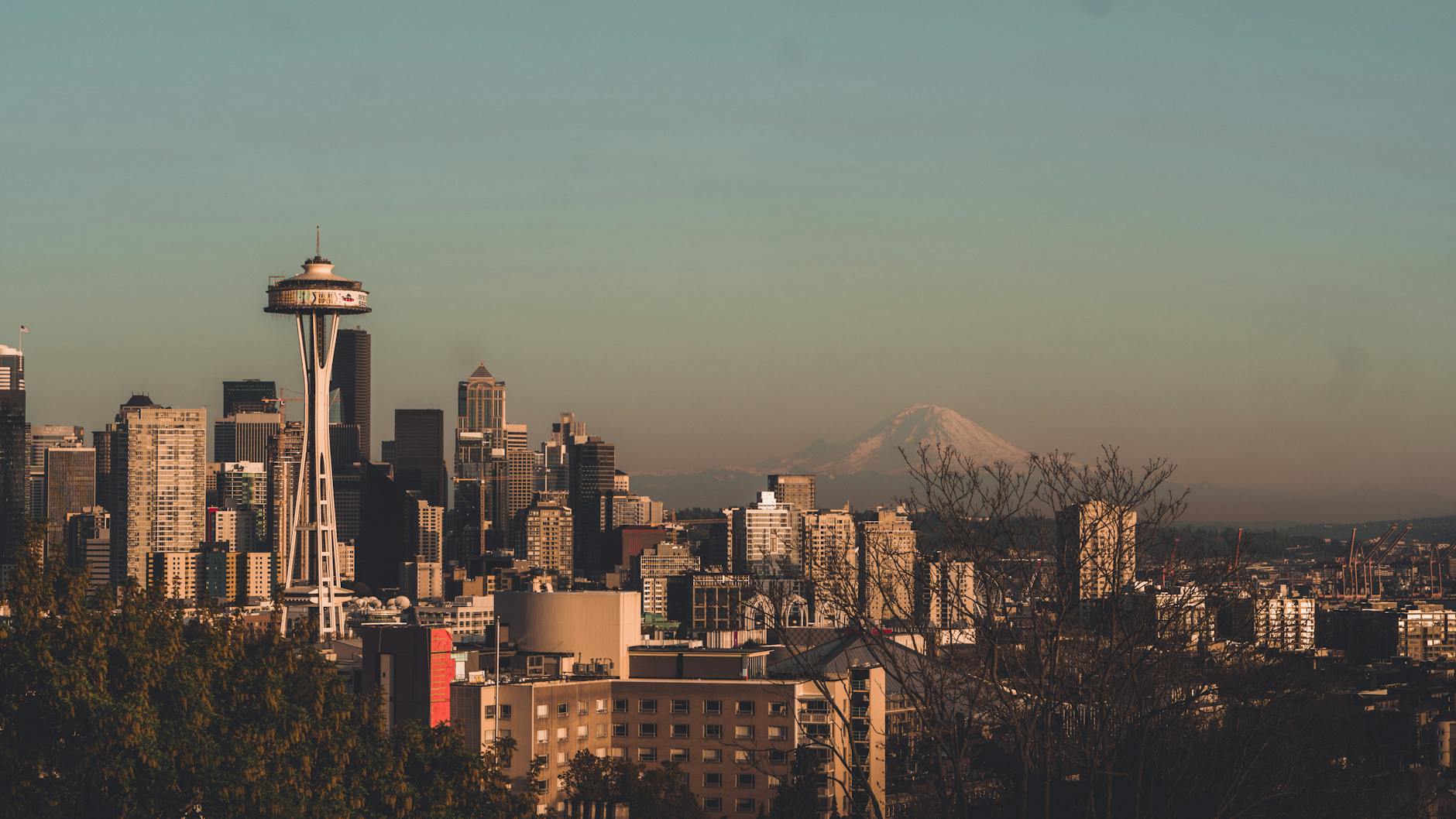
Pacific Northwest Road Trip: Seattle, Olympic National Park, Mount Rainier & Portland in 8 Days
The classic Pacific Northwest loop.
In eight days this route links Seattle's market and Space Needle, the Olympic Peninsula's mile-high ridges, mossy rainforest and sea-stack beaches, the wildflower meadows of Mount Rainier's Paradise, the waterfall wall of the Columbia River Gorge and Portland's hilltop gardens.
Best time: July through September for snow-free mountain trails, wildflowers and the driest coast weather; June and October work with rain gear and flexible plans — this itinerary favours the July–September window.
- Fly into Seattle (SEA) and out of Portland (PDX) — an open-jaw booking saves backtracking.
- You don't need a car for the two Seattle days; pick it up on Day 3 and cross Puget Sound on the Bainbridge ferry.
- An America the Beautiful pass covers entry to both Olympic and Mount Rainier national parks; buy attraction tickets and the seasonal Multnomah Falls permit on the official sites.
- The west side of the Olympics is the wettest place in the lower 48, so pack a real rain shell even in August.
- Mountain viewpoints like Hurricane Ridge and Paradise are much cooler than the cities and can hold snow into July, so carry layers and check forecasts before committing to high trails.
Where to Stay
Move with the road-trip loop to avoid backtracking — book hotels each night, or swap in a campground on the nature nights
Where to Stay
Move with the road-trip loop to avoid backtracking — book hotels each night, or swap in a campground on the nature nights
Downtown Seattle
Stay downtown for nights 1–2 and keep the first two days car-free.
Port Angeles or Lake Crescent Lodge
Use Port Angeles or Lake Crescent for night 3 after Hurricane Ridge; campers can use Heart o' the Hills (first-come, no reservations) on the Hurricane Ridge road.
Forks or Lake Quinault
Stay in Forks or by Lake Quinault for night 4 after the west-end beaches; to camp, Willaby on Lake Quinault's south shore reserves on recreation.gov (open roughly late April–October).
Ashford or Packwood
Use a Mount Rainier gateway for night 5; campers can stay in-park at Cougar Rock near Paradise (recreation.gov, open roughly late May–early October).
Hood River or Cascade Locks
Stay in the Columbia River Gorge for night 6; to camp, Ainsworth State Park sits among the Oregon-side waterfalls (reserveamerica.com, open roughly mid-March–October).
Portland
Finish in Portland for night 7.
Official links & tickets
Use official sites for current tickets, permits, ferry schedules, road status and park rules
Official links & tickets
Use official sites for current tickets, permits, ferry schedules, road status and park rules
Pacific Northwest planning links
Confirm current conditions and requirements before setting out.
Budget Snapshot
Getting Around
8-Day Itinerary Breakdown
Day 1: Arrive in Seattle & Pike Place Market
Fly into Seattle, keep the first two days car-free and stay downtown.

Arrive in Seattle
Land at Seattle–Tacoma International (SEA) and ride the Link light rail straight into downtown — you don't need the rental car for the two Seattle days, so save the pick-up for Day 3.
Pike Place Market & the waterfront
A free, working public market — the fishmongers, the original Starbucks and the neon Public Market Center clock; walk down to the rebuilt Elliott Bay waterfront afterward. Most market stalls wind down by late afternoon.
Day 2: Seattle Center: Space Needle, Chihuly & MoPOP
Spend the day at Seattle Center and keep downtown Seattle as the base.
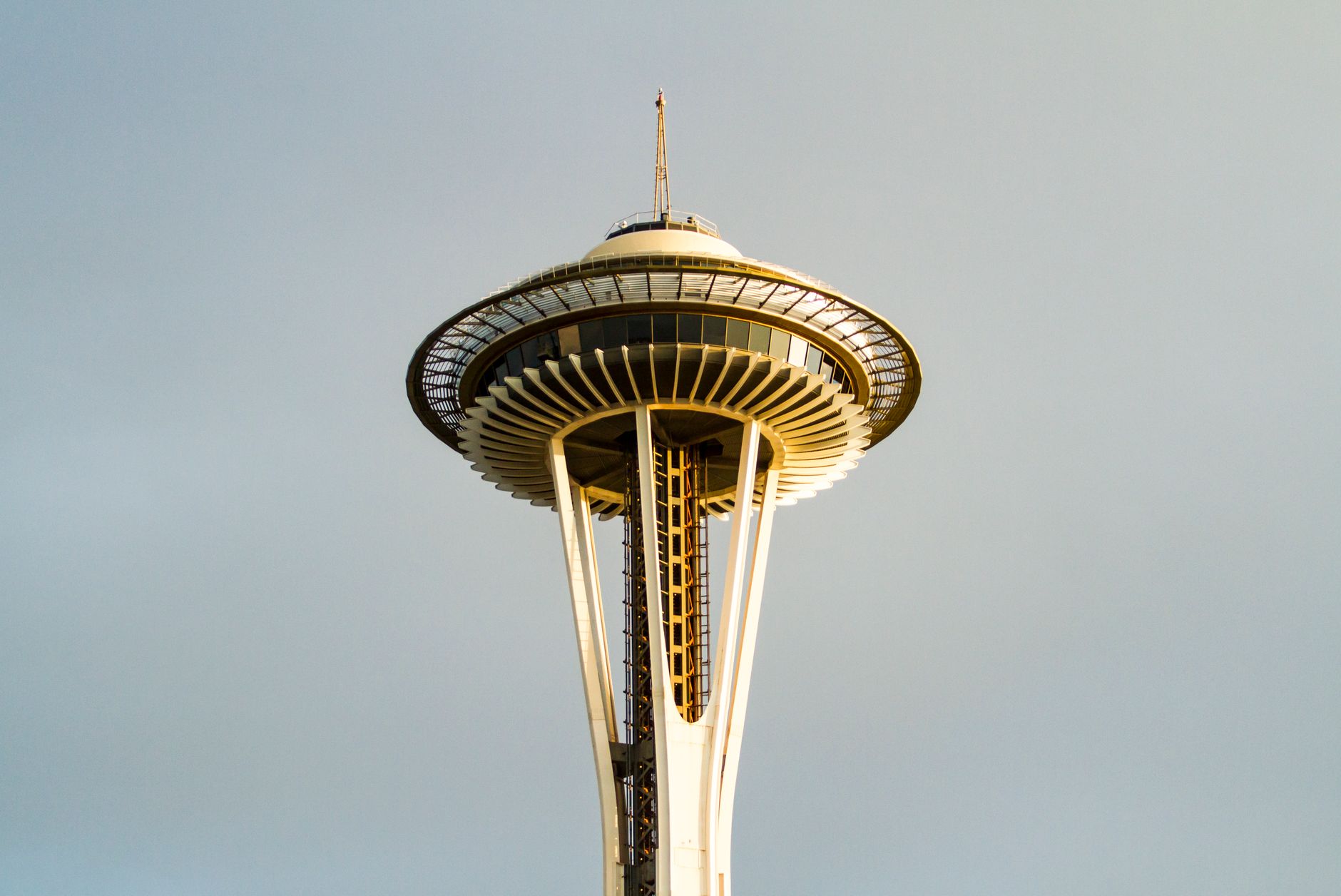
The Space Needle
A ticketed observation tower from the 1962 World's Fair with a rotating glass floor; timed tickets sell out on clear summer days, and combo tickets with Chihuly Garden and Glass are sold.

Chihuly Garden and Glass
A ticketed exhibition of Dale Chihuly's blown-glass installations right beside the Space Needle — eight galleries, the Glasshouse and an outdoor garden where glass sculptures grow among the plants.
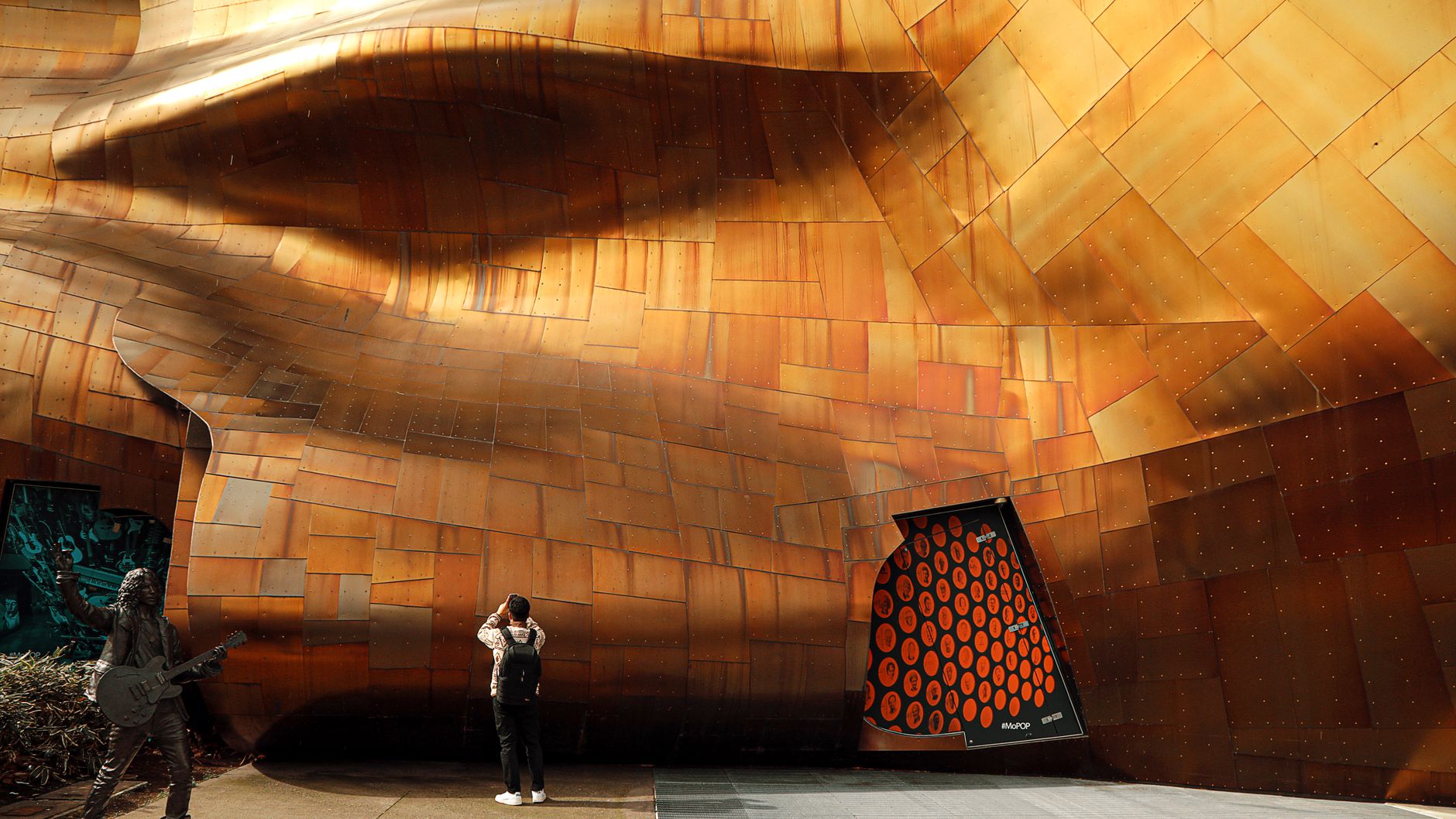
The Museum of Pop Culture (MoPOP)
A ticketed Frank Gehry-designed museum of music, sci-fi and pop culture at Seattle Center, with exhibits on Nirvana, Hendrix and horror cinema.
Day 3: Ferry to the Olympic Peninsula: Hurricane Ridge & Lake Crescent
Pick up the rental car for the road-trip leg and stay in Port Angeles or on Lake Crescent. Campers can trade the hotel for Heart o' the Hills Campground, on the Hurricane Ridge road just inside the park — it is first-come, first-served (no reservations, self-register) and open year-round, so arrive by early afternoon on summer weekends.

Pick up the car & cross Puget Sound
Collect the rental car, then take the Seattle–Bainbridge Island ferry (about 35 minutes, drive-up — check Washington State Ferries for schedules) and follow WA-305/US-101 to Port Angeles, about 2 hours from the ferry dock.
Hurricane Ridge
Park pass entry — Olympic National Park; the 17-mile Hurricane Ridge Road climbs a mile high to sweeping views of the Olympic interior. The historic day lodge burned down in 2023 and services on the ridge remain limited, and the road can close for weather — check current status on nps.gov before driving up.
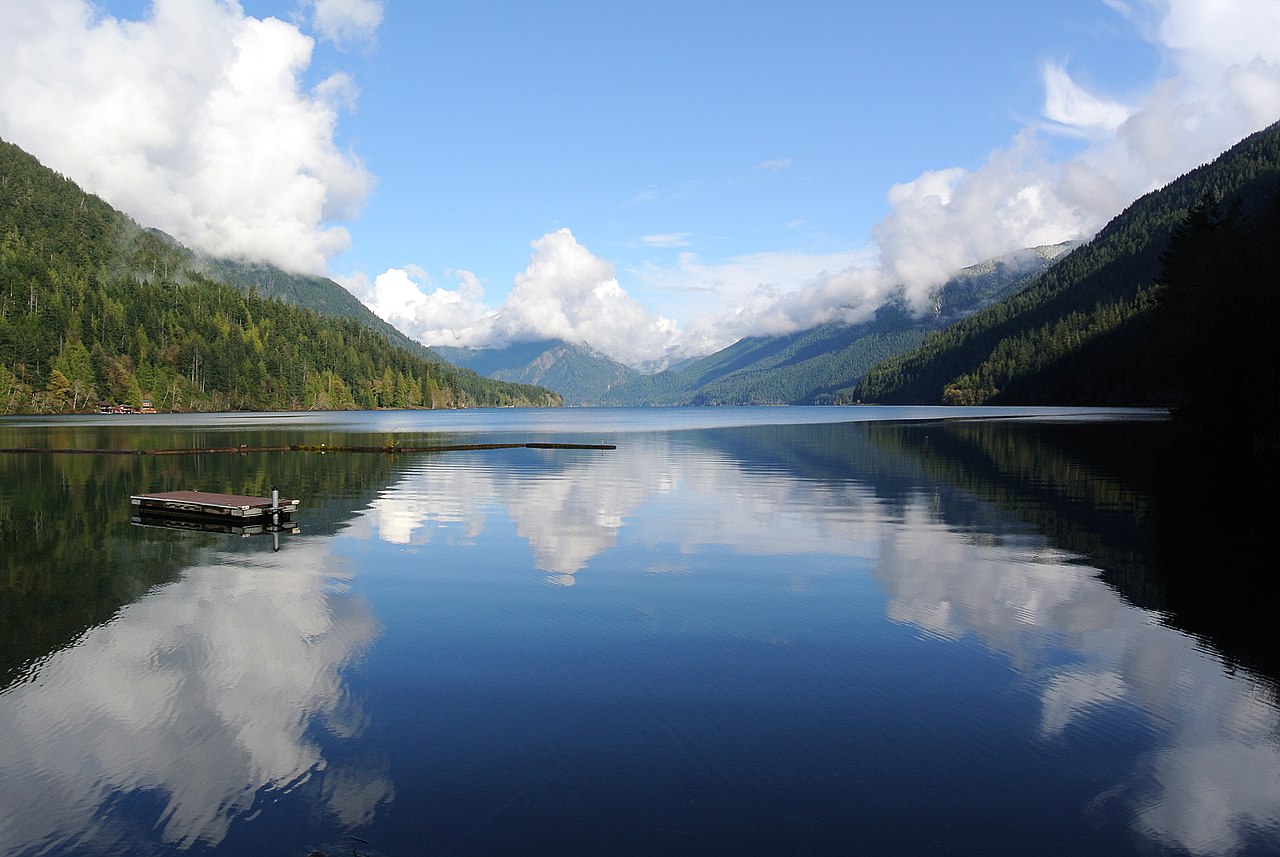
Lake Crescent
A free stop on US-101 west of Port Angeles — a deep, glacially carved lake famous for its clarity; stretch your legs on the short Marymere Falls trail or the shoreline by Lake Crescent Lodge.
Day 4: The wild west end: Hoh Rain Forest & the Pacific beaches
Use Forks or Lake Quinault for the overnight after the rainforest and coast. To camp instead, Willaby Campground sits in the rainforest on Lake Quinault's south shore (open roughly late April to October, reserve on recreation.gov) — a good base if you push south toward Quinault rather than staying in Forks.
The Hoh Rain Forest & the Hall of Mosses
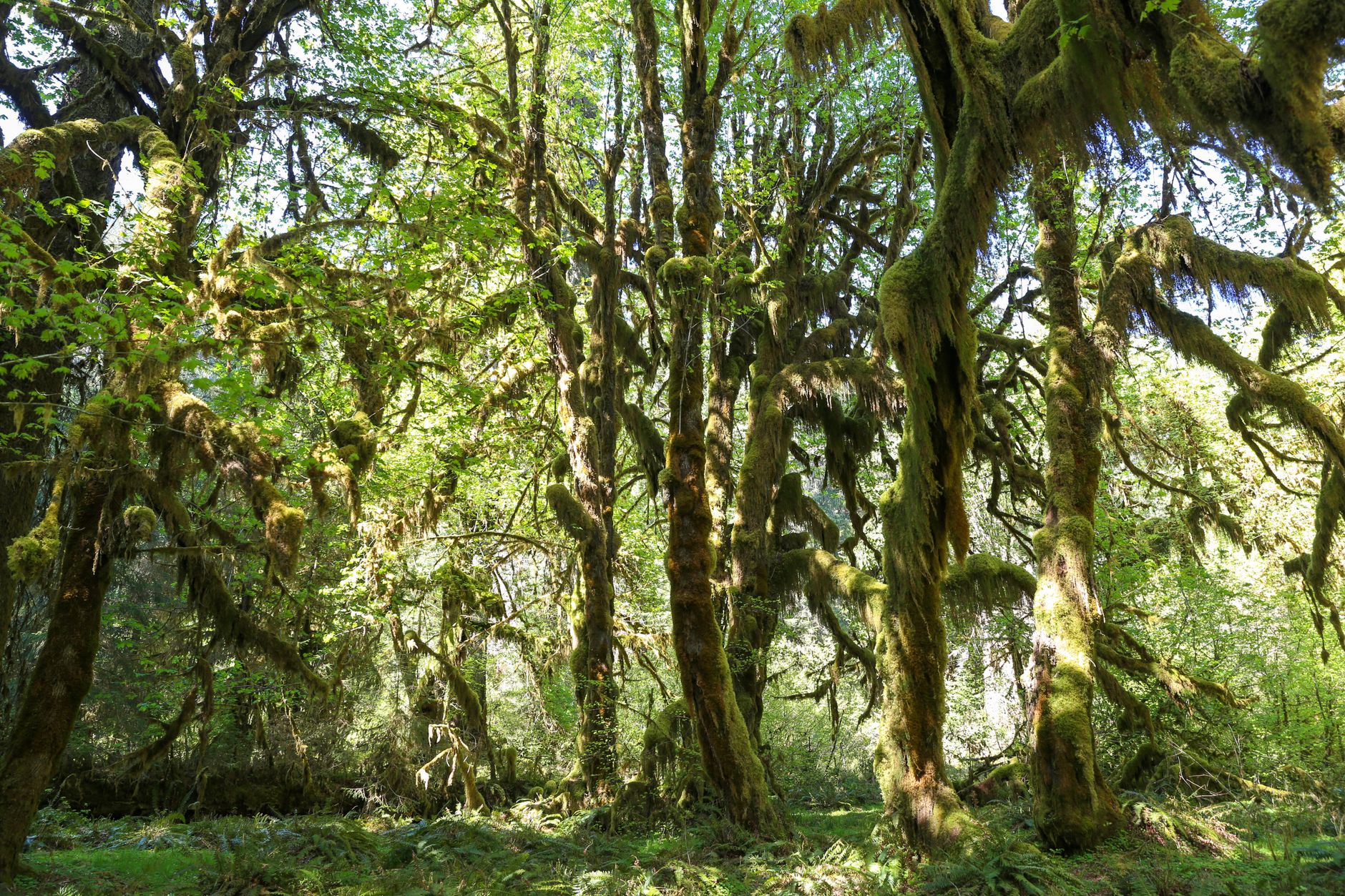
Park pass entry; one of the largest temperate rainforests in the US — the short Hall of Mosses loop winds beneath maples hung with clubmoss. Arrive early in summer: the small entrance road queues by mid-morning, and the Upper Hoh Road has a history of winter washout closures (repaired and open after the December 2024 flood damage) — check current road status on nps.gov.
Rialto Beach & Hole-in-the-Wall
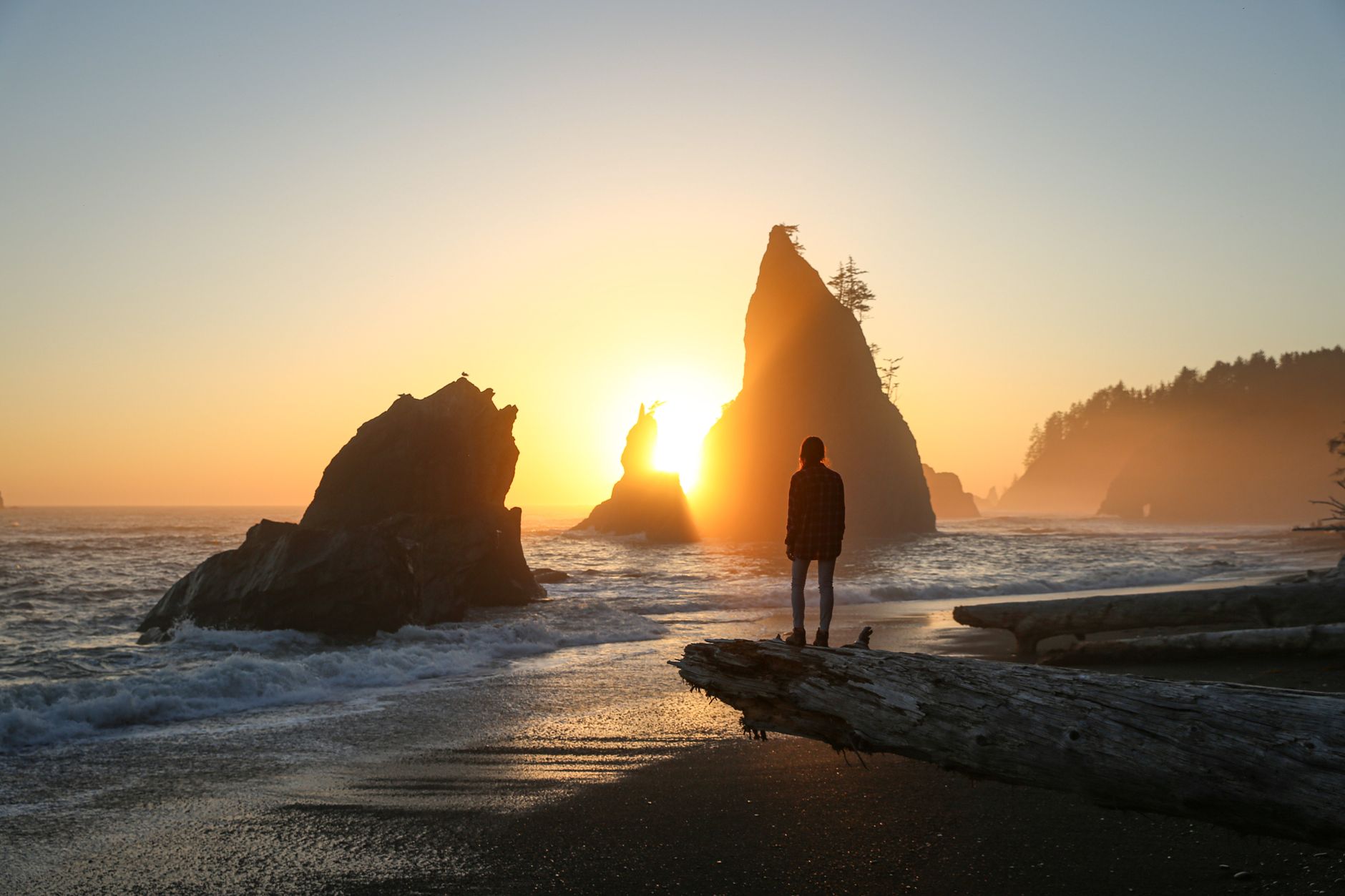
A free, wild drift-log beach near La Push; the walk north to the Hole-in-the-Wall sea arch is about 1.5 miles each way and only passable at lower tides — check a tide table before setting out and never turn your back on the surf.

Ruby Beach at sunset
A free overlook-and-beach stop back on US-101 as you drive south — sea stacks, tide pools and huge bleached drift logs; it faces west, so time it for sunset on the way to your Lake Quinault or Forks overnight.
Day 5: Lake Quinault, then across to Mount Rainier
Continue to Ashford or Packwood for the night at the Mount Rainier gateway. Campers can stay inside the park instead at Cougar Rock Campground, about 14 miles east of Ashford on the road to Paradise (open roughly late May to early October, reserve on recreation.gov; some first-come sites) — it puts you closest to the next morning's wildflower meadows.

Lake Quinault & the rain-forest nature loops
A quiet morning on the lake's south shore — short free rain-forest nature trails behind the historic 1926 Lake Quinault Lodge, and the world's largest Sitka spruce a short drive away.
Drive to the Mount Rainier gateway
Leave the peninsula via Aberdeen and Olympia and continue to Ashford or Packwood at the foot of Mount Rainier — allow roughly 3.5–4 hours; fill the tank and buy supplies before the mountain, where services are sparse.
Day 6: Mount Rainier: Paradise & Reflection Lakes
After the mountain, stay in Hood River or Cascade Locks toward the Columbia River Gorge. For a camping night, Ainsworth State Park sits on the Oregon side among the Gorge's waterfalls near Multnomah Falls (open roughly mid-March to October, reserve up to six months ahead on reserveamerica.com) — handy for the next morning's waterfall corridor.

Paradise & the Skyline Trail
Park pass entry — Mount Rainier National Park; Paradise's subalpine meadows explode with wildflowers from mid-July into August, and the Skyline Trail loop climbs to close-up glacier views. The park used timed-entry reservations in 2024–2025 but cancelled them for 2026 — no entry reservation is needed this year, though it's worth checking nps.gov in case the system returns.

Reflection Lakes & Narada Falls
Free roadside stops on Stevens Canyon Road just below Paradise — on a still morning the mountain mirrors in Reflection Lakes, and Narada Falls plunges 168 feet in its main drop a short walk from its car park; snow can linger by the lakes into early summer.
Drive south toward the Columbia River Gorge
Descend from the park via Packwood and US-12, crossing to the Columbia River at Hood River or Cascade Locks for the night — a couple of hours of forested highway; check which park roads and gates are open for your dates on nps.gov.
Day 7: The Columbia River Gorge waterfalls, into Portland
Follow the Gorge into Portland and stay in the city for the final night.
Multnomah Falls
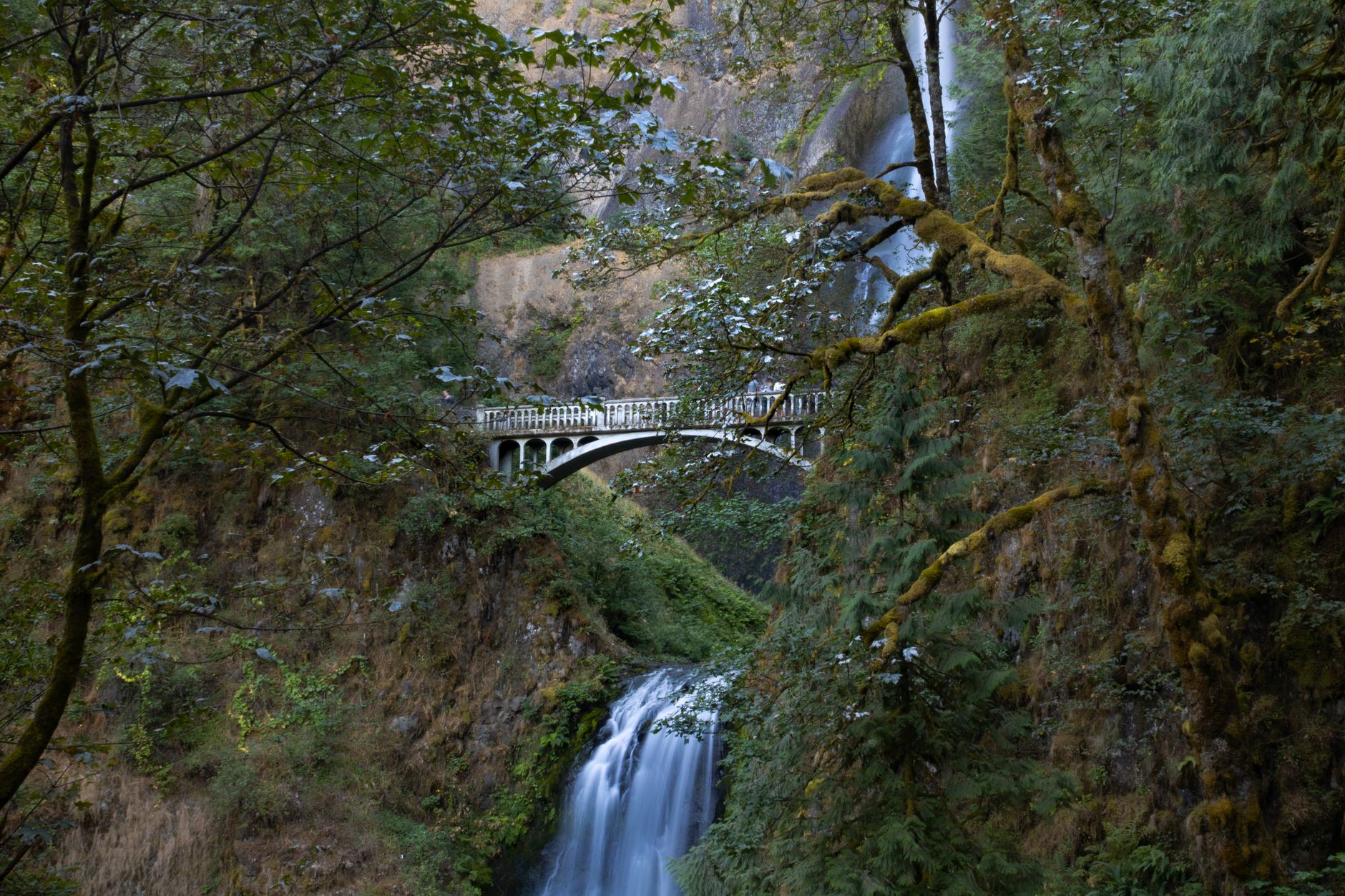
Oregon's tallest waterfall, 620 feet in two tiers with the Benson Footbridge between them, right off I-84/the Historic Columbia River Highway. In peak season — May 22 to September 7 in 2026 — a low-cost timed-use permit from recreation.gov is required to use the I-84 parking lot between 9am and 6pm; check current rules before you go.
Vista House at Crown Point
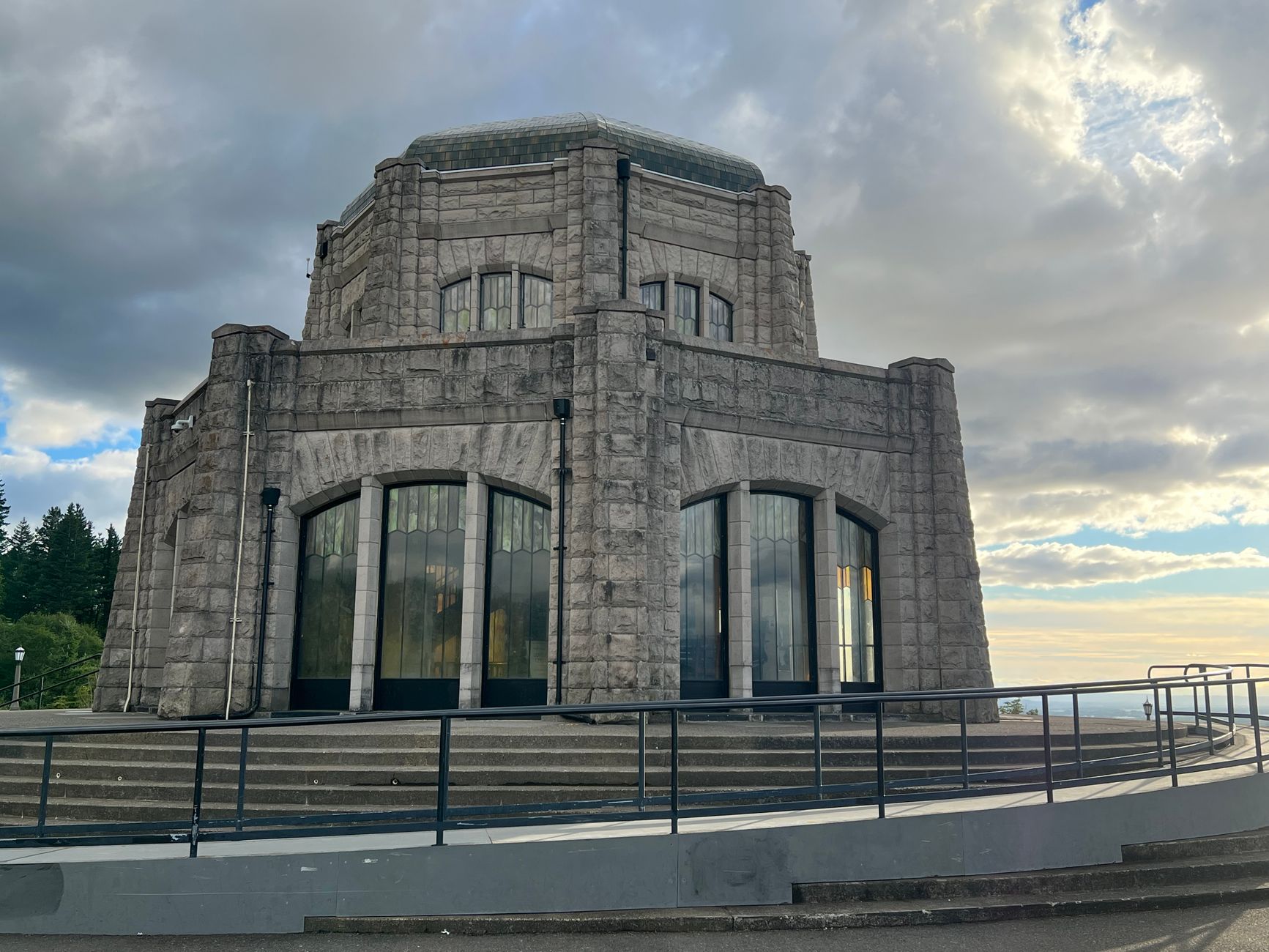
A free 1918 octagonal stone observatory perched 733 feet above the river on the Historic Columbia River Highway, with sweeping views back up the Gorge; the interior keeps seasonal hours.
Into Portland
Roll the last 30–40 minutes into Portland, drop the bags and spend the evening the local way — food carts, an independent brewery, and a browse of Powell's City of Books, the famous city-block bookstore.
Day 8: Portland's gardens & departure
Finish in Washington Park, then return the car at Portland International Airport.

The Portland Japanese Garden
A ticketed hillside garden in Washington Park, often called the most authentic Japanese garden outside Japan — eight garden styles, a tea house and, on clear days, a framed view of Mount Hood; timed tickets are sold online.

The International Rose Test Garden
A free public rose garden a short walk downhill from the Japanese Garden — more than 10,000 bushes that peak from late May into September, with city-and-mountain views from the terraces.
Return the car & fly home
Drive the 20–30 minutes to Portland International (PDX), drop the rental car and fly home — or extend with a 90-minute detour to Cannon Beach and Haystack Rock on the Oregon coast before you go.
Seattle, Olympic, Mount Rainier, the Columbia River Gorge & Portland
Eight day-master anchors trace the open-jaw road trip from Seattle around the Olympic Peninsula, across Mount Rainier and the Columbia River Gorge, and into Portland.
- 1
Seattle — Pike Place Market
Arrival and the waterfront market
- 2
Seattle Center — Space Needle
Space Needle, Chihuly and MoPOP
- 3
Olympic — Hurricane Ridge
The Olympic Peninsula and Lake Crescent
- 4
Olympic — Hoh Rain Forest
The rainforest and Pacific beaches
- 5
Lake Quinault
The south shore before Mount Rainier
- 6
Mount Rainier — Paradise
Wildflower meadows and Reflection Lakes
- 7
Columbia River Gorge — Multnomah Falls
Waterfalls and Vista House
- 8
Portland — Japanese Garden
Portland's Washington Park gardens
Frequently Asked Questions
How many days do you need for a Pacific Northwest road trip?
Eight days covers Seattle, the Olympic Peninsula loop, Mount Rainier, the Columbia River Gorge and Portland without rushing; with ten you can add the Oregon coast at Cannon Beach or Mount St. Helens.
What is the best time of year for this route?
July through September — mountain roads and high trails at Hurricane Ridge and Paradise are reliably open and snow-free, wildflowers peak from mid-July, and the coast gets its driest weather; shoulder months work with rain gear and flexibility.
Do I need a car, and where should I pick it up?
Yes for everything outside Seattle — but skip the car for the two Seattle days and collect it on Day 3 before the Bainbridge ferry; flying into Seattle and out of Portland avoids a long backtrack.
Can I camp instead of staying in hotels?
Yes — this is a switch-lodging-each-night road trip, so campers can swap the hotel for a campground on the four nature nights and keep hotels for Seattle and Portland. Good bases are Heart o' the Hills near Hurricane Ridge (first-come, no reservations, year-round), Willaby on Lake Quinault (recreation.gov, roughly late April–October), Cougar Rock near Mount Rainier's Paradise (recreation.gov, roughly late May–early October) and Ainsworth State Park among the Columbia Gorge waterfalls (reserveamerica.com, roughly mid-March–October). Most fill fast in summer, so book the reservable ones early and arrive by early afternoon at first-come sites; always confirm current dates on the official sites.
Do the national parks require entrance reservations?
Olympic does not; Mount Rainier ran timed-entry reservations for its Paradise and Sunrise corridors in 2024–2025 but cancelled them for 2026, so neither park needs an entrance reservation this year — still check nps.gov for your dates in case the system returns. One America the Beautiful pass covers entry to both parks.
Does Multnomah Falls need a permit?
In the peak season — May 22 to September 7 in 2026 — a timed-use permit from recreation.gov ($2 per vehicle) is required to use the I-84 parking lot between 9am and 6pm; outside those dates and hours you can generally just show up.
Is Hurricane Ridge open?
The road typically opens daily in summer, but the historic day lodge burned down in 2023 and facilities on the ridge remain limited; the road also closes for weather and operates limited days in winter — check the Olympic National Park site before driving up.
What should I know before walking to Hole-in-the-Wall at Rialto Beach?
It is about 1.5 miles each way over sand and cobbles and only passable at lower tides — check an official tide table, watch for rolling drift logs and give the surf a wide berth.
When do the wildflowers bloom at Mount Rainier?
The Paradise meadows usually peak from mid-July into August, depending on the snowpack — earlier in low-snow years; the Skyline Trail can hold snow patches into July.
Is this itinerary doable in reverse, starting in Portland?
Yes — fly into PDX and out of SEA and run the days backward; the only ordering that matters is checking tides for the coast beaches and timed tickets for the Seattle attractions on the days you'll be there.
Make this plan your own
Copy this plan into your account in one click — keep the original for reference and edit your copy any way you like.
Sign in once to save and edit your own copy.