
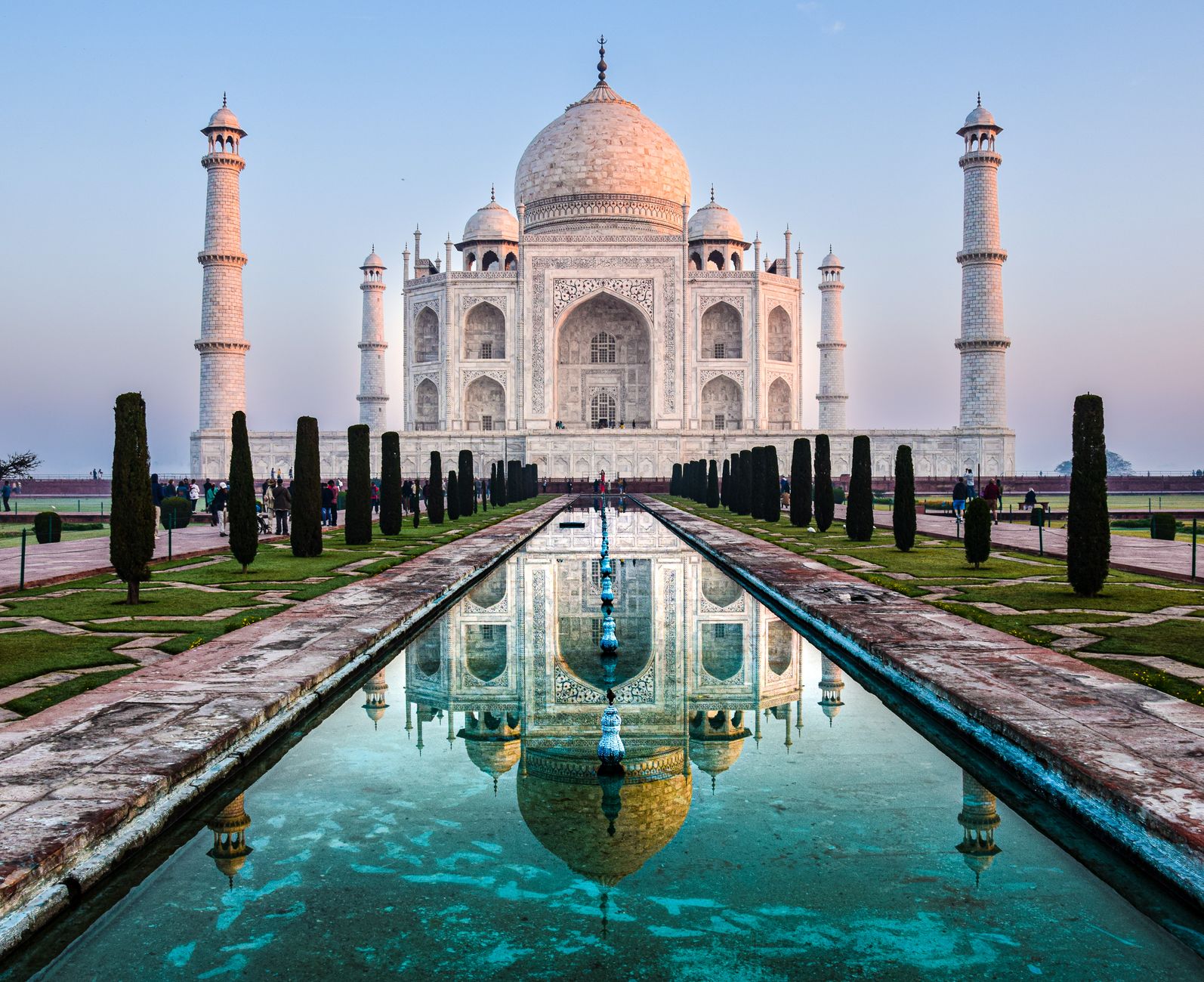
India Golden Triangle Itinerary: Delhi, Agra & Jaipur in 7 Days
India's classic first week.
The Golden Triangle links three cities: Delhi, the layered Mughal-and-imperial capital; Agra, where the Taj Mahal and Agra Fort face the Yamuna; and Jaipur, Rajasthan's pink-walled city of palaces and hill forts.
Best time: the cool, dry season from about October to March. April–June is very hot, and the monsoon from July–September brings humidity and rain.
- Fly into Delhi (DEL), take a fast morning Gatimaan or Shatabdi train to Agra, then use a private car for Agra → Fatehpur Sikri → Jaipur.
- Fly out of Jaipur (JAI), or connect back through Delhi.
- Book trains on IRCTC and monument tickets on the official ASI and state-tourism sites.
- Spring and summer are genuinely hot, so start monuments early, carry water, and wear a hat.
- Stick to bottled or filtered water and freshly cooked food to avoid an upset stomach — what travellers call Delhi belly.
Where to Stay
Use three bases as the route moves from Delhi to Agra and Jaipur
Where to Stay
Use three bases as the route moves from Delhi to Agra and Jaipur
Delhi
Choose a central base such as around Connaught Place, or stay near the airport for early trains, for nights 1–2.
Agra
Stay near the Taj East or West gate for the dawn visit on night 3.
Jaipur
Choose the old walled city or quieter Civil Lines for nights 4–6.
Official links & tickets
Use official government, railway, monument and tourism sites for current requirements and bookings
Official links & tickets
Use official government, railway, monument and tourism sites for current requirements and bookings
India planning, entry and monument tickets
Check national tourism, e-Visa and Archaeological Survey of India information before travel.
Rail and regional tourism
Use the official railway and state or city tourism sites for current route information.
Budget Snapshot
Getting Around
7-Day Itinerary Breakdown
Day 1: Arrive in Delhi & Old Delhi's Mughal heart
Indira Gandhi International (DEL) → Delhi base — arrival, the Red Fort and Old Delhi

Arrive in Delhi and settle in
Land at Indira Gandhi International Airport (DEL), take it easy for the first afternoon and adjust to the time change.
The Red Fort (Lal Qila)
Visit the ticketed Mughal fort, the walled palace of Shah Jahan's Delhi.
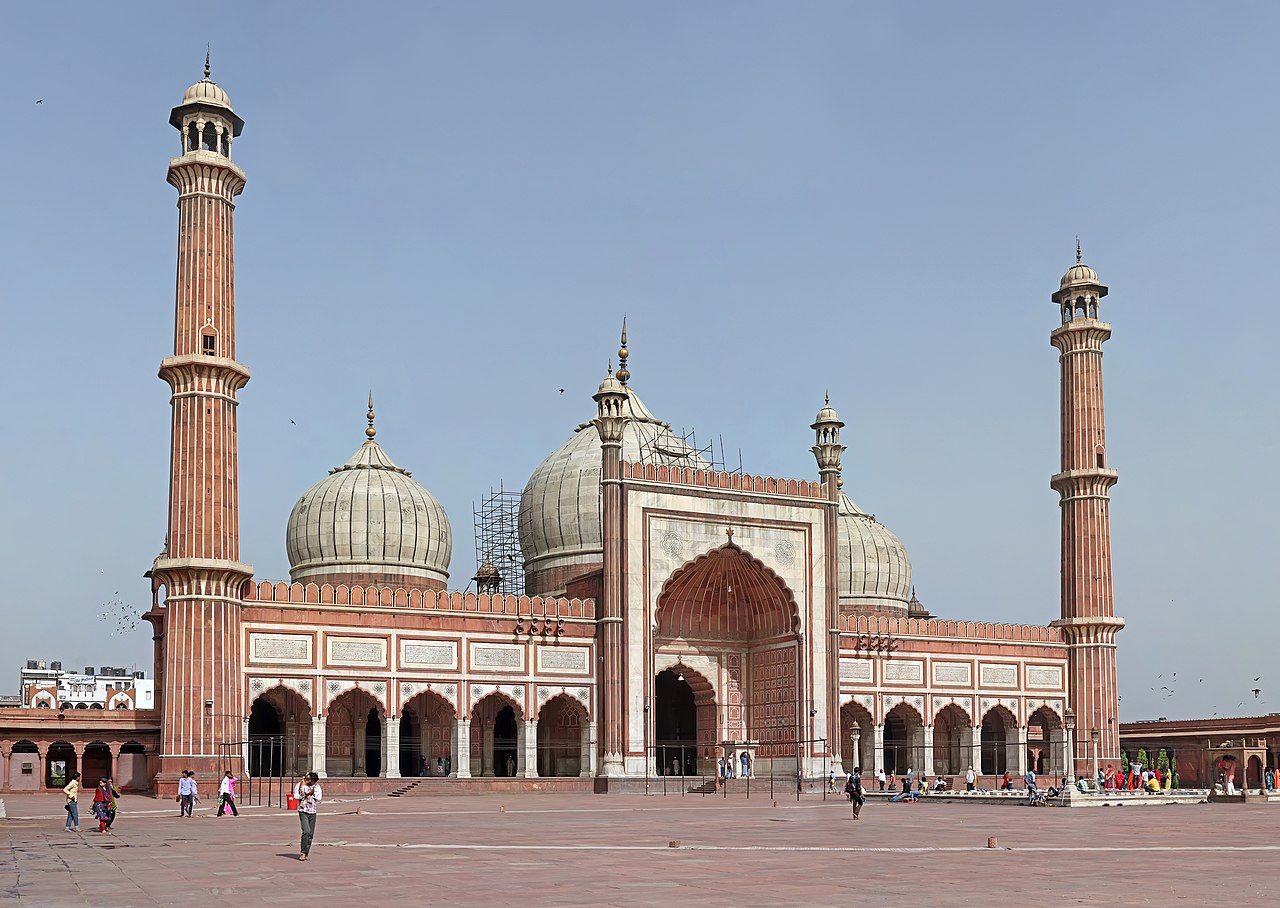
Jama Masjid & a guided Old Delhi walk through Chandni Chowk
The mosque itself is free to enter, while guided Old Delhi heritage-and-food walks through Chandni Chowk's lanes are a genuine bookable experience.
Day 2: New Delhi's Mughal tombs & imperial avenue
Base: Delhi — Humayun's Tomb, the Qutb Minar and India Gate
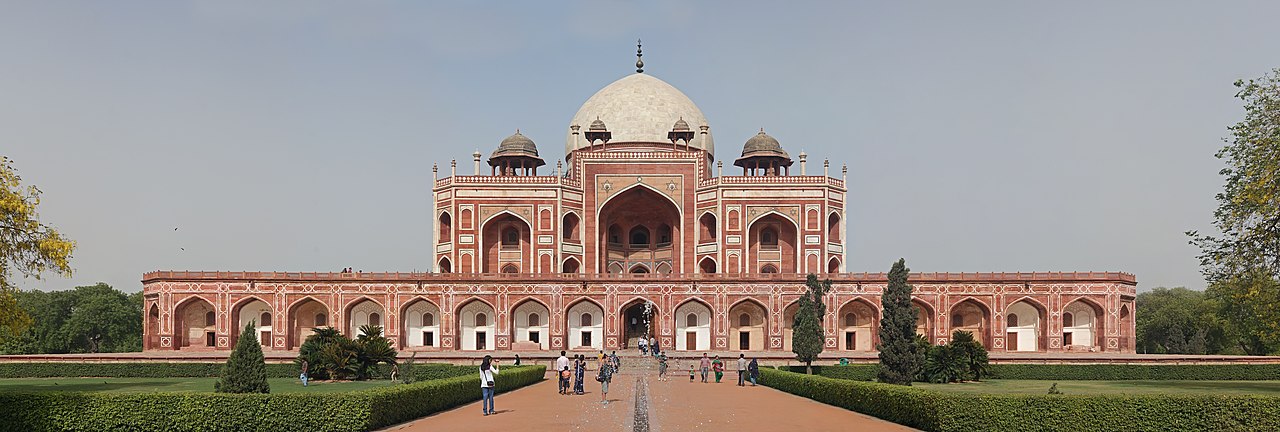
Humayun's Tomb
Visit the ticketed UNESCO Mughal garden-tomb, the prototype for the Taj Mahal.

The Qutb Minar complex
Explore the ticketed UNESCO complex around the world's tallest brick minaret.

India Gate & the imperial avenue
Walk up to the open public war memorial on Kartavya Path. It is free to visit, so no activity ticket is attached.
Day 3: The train to Agra & Agra Fort
Delhi → Agra — a fast morning express and the red-sandstone fort

The morning express train to Agra
Fast trains such as the Gatimaan or Shatabdi run Delhi–Agra in a couple of hours; book ahead on IRCTC.
Agra Fort
Visit the ticketed UNESCO red-sandstone fort with views across the Yamuna to the Taj Mahal.
Day 4: The Taj Mahal at dawn, Fatehpur Sikri & on to Jaipur
Agra → Fatehpur Sikri → Jaipur — the Taj Mahal, the ghost-city and a private-car transfer

The Taj Mahal at sunrise
Use a timed, dated entry ticket bought in advance and go at opening for the softest light and the smallest crowds.

Fatehpur Sikri, the abandoned Mughal capital
Explore the ticketed UNESCO ghost-city and its Buland Darwaza gateway as an easy stop on the road toward Jaipur.
Drive on to Jaipur
The Agra–Jaipur road runs via Fatehpur Sikri and Bharatpur; allow most of the afternoon.
Day 5: Jaipur — Amber Fort & the lake palace
Base: Jaipur — the hilltop fort-palace and a lakeshore photo stop

The Amber Fort
Visit the ticketed hilltop Rajput fort-palace above Maota Lake, with mirrored halls and courtyards.
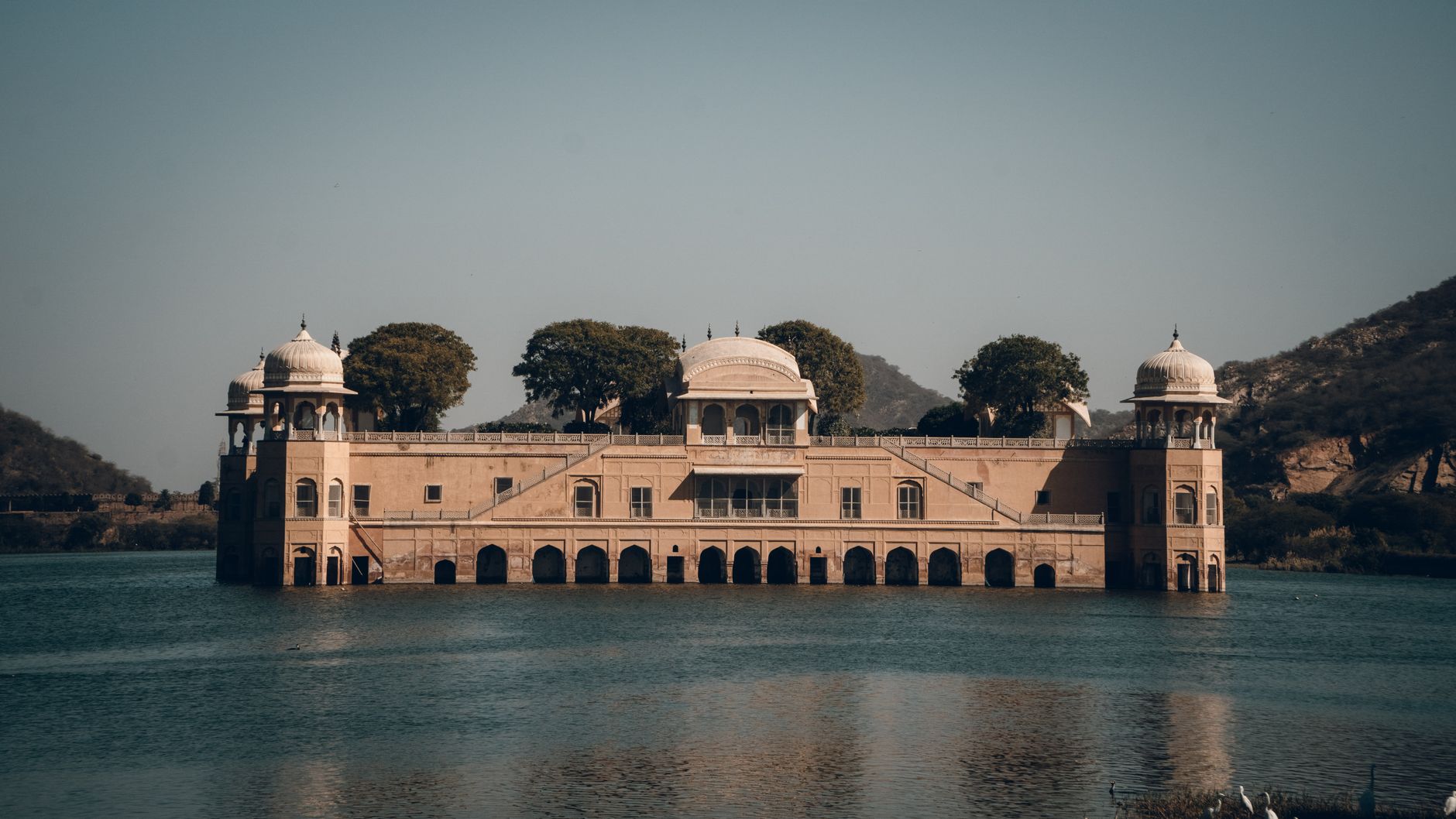
The Jal Mahal water palace
View the palace from the lakeshore promenade on Man Sagar Lake. The palace itself is not open to visitors, making this a free photo stop.
Day 6: Jaipur's old city — palaces, winds & the sky
Base: Jaipur — the Hawa Mahal, City Palace and Jantar Mantar

The Hawa Mahal (Palace of Winds)
Visit the ticketed pink-sandstone facade of latticed windows and climb inside for the city view.

The City Palace
Explore the ticketed royal palace complex, still partly a residence, with courtyards, museums and the Chandra Mahal.

The Jantar Mantar observatory
Visit the ticketed UNESCO collection of giant 18th-century masonry astronomical instruments, including the world's largest stone sundial.
Day 7: A last Jaipur morning & departure
Jaipur old city → Jaipur International (JAI) — a final museum, bazaars and departure

The Albert Hall Museum & Jaipur's bazaars
Visit the ticketed Indo-Saracenic museum in Ram Niwas Garden, then pair it with a last wander through Jaipur's old-city bazaars.
Transfer to the airport and fly out
Fly home from Jaipur (JAI), or connect back through Delhi for a long-haul departure.
Delhi through Agra to Jaipur
Seven master-image anchors trace the Golden Triangle from Old and New Delhi to Agra, Fatehpur Sikri and Jaipur.
- 1
Old Delhi — Red Fort
Arrival and Old Delhi's Mughal heart
- 2
New Delhi — Humayun's Tomb
Mughal tombs and the imperial avenue
- 3
Agra — Agra Fort
The morning train from Delhi and Agra's red fort
- 4
Agra — Taj Mahal
The Taj Mahal at dawn before the drive toward Jaipur
- 5
Amber / Jaipur
Amber Fort and the Jal Mahal lake view
- 6
Jaipur old city — Hawa Mahal
Palaces, winds and the sky
- 7
Jaipur — Albert Hall
A final museum and bazaar morning before departure
Frequently Asked Questions
How many days do you need for the Golden Triangle?
About a week is the classic length: two days in Delhi, one to two around Agra, and two to three in Jaipur without rushing.
What is the best time to visit?
The cool, dry season from roughly October to March is best. April–June is very hot, and July–September is the monsoon.
How do I get between Delhi, Agra and Jaipur?
A fast train covers Delhi–Agra, then a private car with a driver is the easiest way to link Agra, Fatehpur Sikri and Jaipur. Book trains on IRCTC.
Is the Taj Mahal closed on any day?
Yes. The Taj Mahal is closed to tourists on Fridays; go at opening on other days for the best light and fewer crowds.
Do I need to book monument tickets in advance?
You can buy on the official ASI and state-tourism sites or at the gate. The Taj Mahal uses a timed, dated ticket, and carrying your passport speeds things up.
Do I need a visa for India?
Most visitors need a visa. Many nationalities can apply online for an e-Visa through the Government of India portal before travelling.
What should I wear at mosques and temples?
Dress modestly: cover shoulders and knees, remove shoes where asked, and carry a scarf to cover your head at some religious sites.
Is the Golden Triangle safe for first-time visitors?
It is one of India's most-travelled routes and very doable. Use app cabs or prepaid autos, be firm with touts, and take normal precautions with food, water and valuables.
Can I do the Golden Triangle in reverse or add a destination?
Yes. You can start from Jaipur, and many travellers extend to Ranthambore for tigers, Udaipur for lakes, or Varanasi on the Ganges.
Make this plan your own
Copy this plan into your account in one click — keep the original for reference and edit your copy any way you like.
Sign in once to save and edit your own copy.