

Argentina Itinerary: Buenos Aires, Iguazú Falls & Patagonia in 14 Days
Argentina end to end, at an easier pace.
In fourteen days this route links the great porteño capital of Buenos Aires — with time for a polo day — the subtropical thunder of the Iguazú Falls in the far north-east, and a fuller stretch of Patagonia in the deep south: the Perito Moreno Glacier and easy days around El Calafate, and the Fitz Roy massif at El Chaltén, all inside Los Glaciares National Park.
Best time: Patagonia is best in the southern summer, roughly November to March, when the trails are open and the days are long; Iguazú is warm and green year-round. Argentina is a huge country, so the internal flights from Buenos Aires to Iguazú and onward to El Calafate are what make this loop possible, and the extra days build in rest, acclimatisation and weather buffers.
- Fly into Buenos Aires; the distances are continental, so budget for two internal flights — up to Puerto Iguazú, then down to El Calafate, usually via Buenos Aires.
- In Patagonia a rental car or transfers link El Calafate, the Perito Moreno Glacier and El Chaltén.
- Buenos Aires has two airports — Aeroparque (AEP) for most domestic flights and Ezeiza (EZE) for international — and connections often switch between them.
- The weather in Patagonia changes fast and the wind can be ferocious, with sun, rain, sleet and gusts strong enough to knock you over all in one day.
- Check the forecast the night before, start hikes early, and be ready to turn back or change plans when the weather closes in around Fitz Roy.
Where to Stay
Use four bases while crossing the country
Where to Stay
Use four bases while crossing the country
Buenos Aires
Stay in Recoleta or Palermo for nights 1–4, including the polo day.
Puerto Iguazú
Stay near the national park for nights 5–6.
El Calafate
Base by Lago Argentino for the acclimatise day and the glaciers on nights 7–9, and again near the airport on the reposition night 13.
El Chaltén
Stay in the village at the foot of Fitz Roy for nights 10–12.
Official links & tickets
Use official tourism, park, theatre and airline sites for current requirements
Official links & tickets
Use official tourism, park, theatre and airline sites for current requirements
Tourism, parks, tickets and domestic flights
Confirm entry rules, park conditions, tickets and flight details on the official sites.
Budget Snapshot
Getting Around
14-Day Itinerary Breakdown
Day 1: Arrive in Buenos Aires — Plaza de Mayo & Caminito
Arrival, the historic centre and the colourful lanes of La Boca

Arrive in Buenos Aires and settle in
Land at Ezeiza (EZE) or Aeroparque (AEP). It is a long-haul flight for most, so take the first afternoon gently, change some money and adjust before the porteño late-dinner rhythm.
Plaza de Mayo & the Casa Rosada
Explore the free public square in the historic centre, seeing the pink presidential palace, the Cabildo and the Metropolitan Cathedral from the outside; the palace exterior and plaza are open to all, with free weekend guided tours to book separately.

Caminito & the colours of La Boca
Walk the free, open-air pedestrian street of brightly painted houses in the La Boca barrio, birthplace of tango; stay on the tourist lanes and go by day.
Day 2: Buenos Aires — Recoleta & the MALBA
A cemetery of marble mausoleums and Latin American modern art

The Recoleta Cemetery
Enter the ticketed labyrinth of grand marble mausoleums — including Eva Perón's tomb — in the elegant Recoleta barrio, and wander its alleys of statuary and neo-gothic spires.

MALBA — the Museo de Arte Latinoamericano
Visit the ticketed modern-art museum in Palermo with a strong Latin American collection, including works by Frida Kahlo and Argentine masters.
Day 3: Buenos Aires — Teatro Colón & a tango show
A guided opera-house visit and an operated evening tango dinner-show

A guided tour of the Teatro Colón
Join a guided backstage-and-auditorium tour of one of the world's great opera houses, famed for its acoustics, gilded horseshoe hall and painted dome.

A tango show & dinner
Book an operated evening tango dinner-show — orchestra, singers and dancers — in a San Telmo or city-centre tanguería, reserving ahead for a table.
Day 4: Buenos Aires — a polo day & a relaxed Palermo afternoon
The thundering national sport on a day-trip, then a beautiful bookshop and leafy Palermo

A Buenos Aires polo day
Watch the fast, thundering national sport up close on a day-trip: an estancia polo experience outside the city pairs a live match with a beginner lesson and usually an asado lunch, and runs year-round. In November and December the Argentine Open — polo's most prestigious title, contested since 1893 — fills the "Catedral del Polo," the Campo Argentino de Polo in Palermo. A polo field is the largest in organized sport, roughly 300 by 160 yards, about nine American football fields.

El Ateneo Grand Splendid & a Palermo wind-down
Ease off with a relaxed afternoon: browse El Ateneo Grand Splendid, a 1919 theatre turned into one of the world's most beautiful bookshops, its painted dome and gilded balconies now lined with books and a café on the old stage. It's a free walk-in; pair it with a stroll in the leafy Bosques de Palermo nearby.
Day 5: Fly north to the Iguazú Falls
Buenos Aires → Puerto Iguazú — fly north and begin the Argentine park circuits
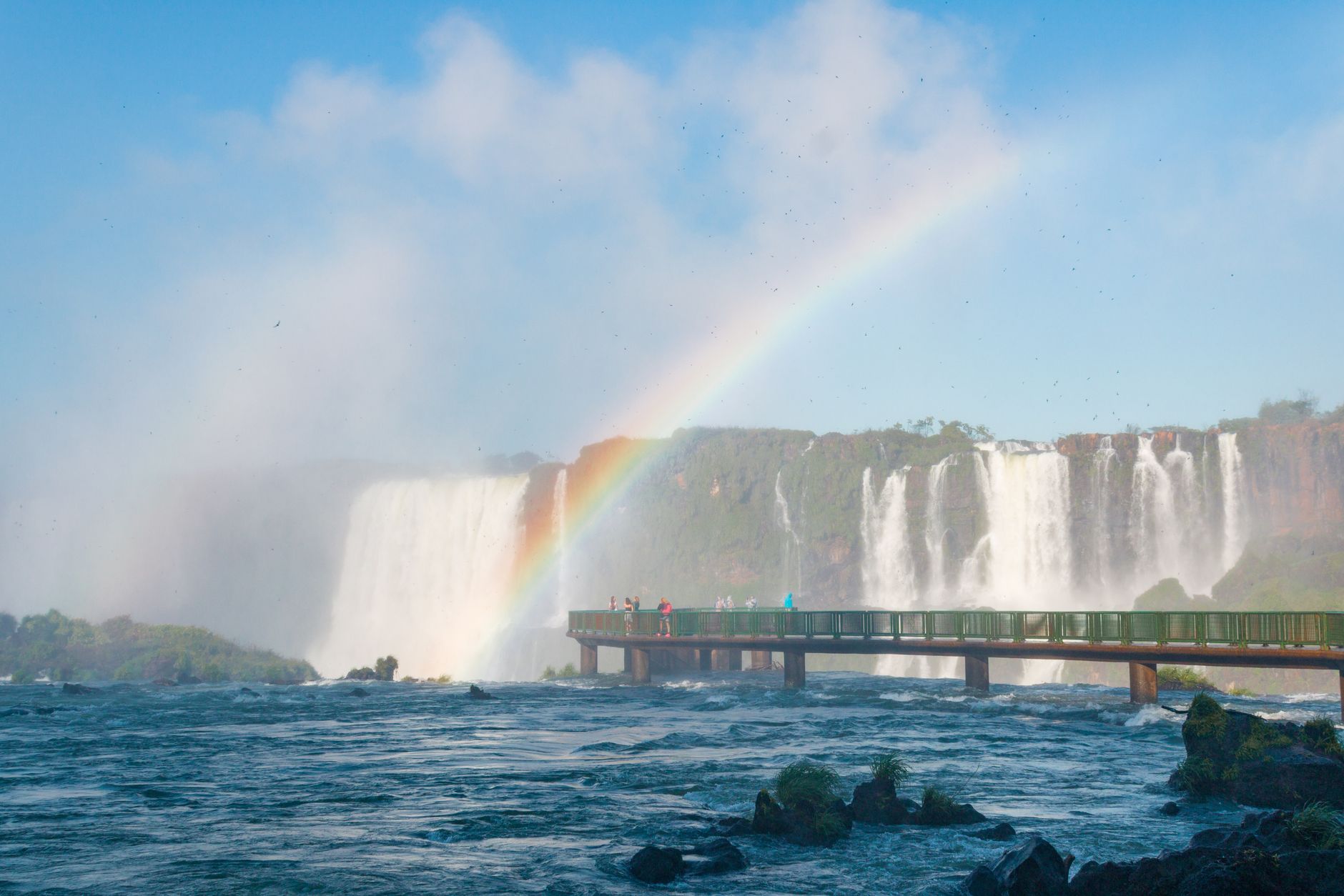
Fly to Puerto Iguazú
Take a morning flight from Buenos Aires up to Puerto Iguazú on the Brazil and Paraguay border; check into a hotel near the Argentine national park entrance, ready for a full day at the falls tomorrow.
Iguazú National Park — the upper & lower circuits
Enter the ticketed UNESCO national park, walk the upper and lower circuit boardwalks past dozens of cataracts, catch a rainbow in the spray and ride the little park train between trailheads.
Day 6: Iguazú — the Devil's Throat & a jungle-boat ride
The park's roaring showpiece followed by an operated adventure under the cascades

The Devil's Throat (Garganta del Diablo)
Follow the ticketed park's long catwalk over the upper river to the roaring horseshoe where the bulk of the Iguazú River thunders over the edge into mist.
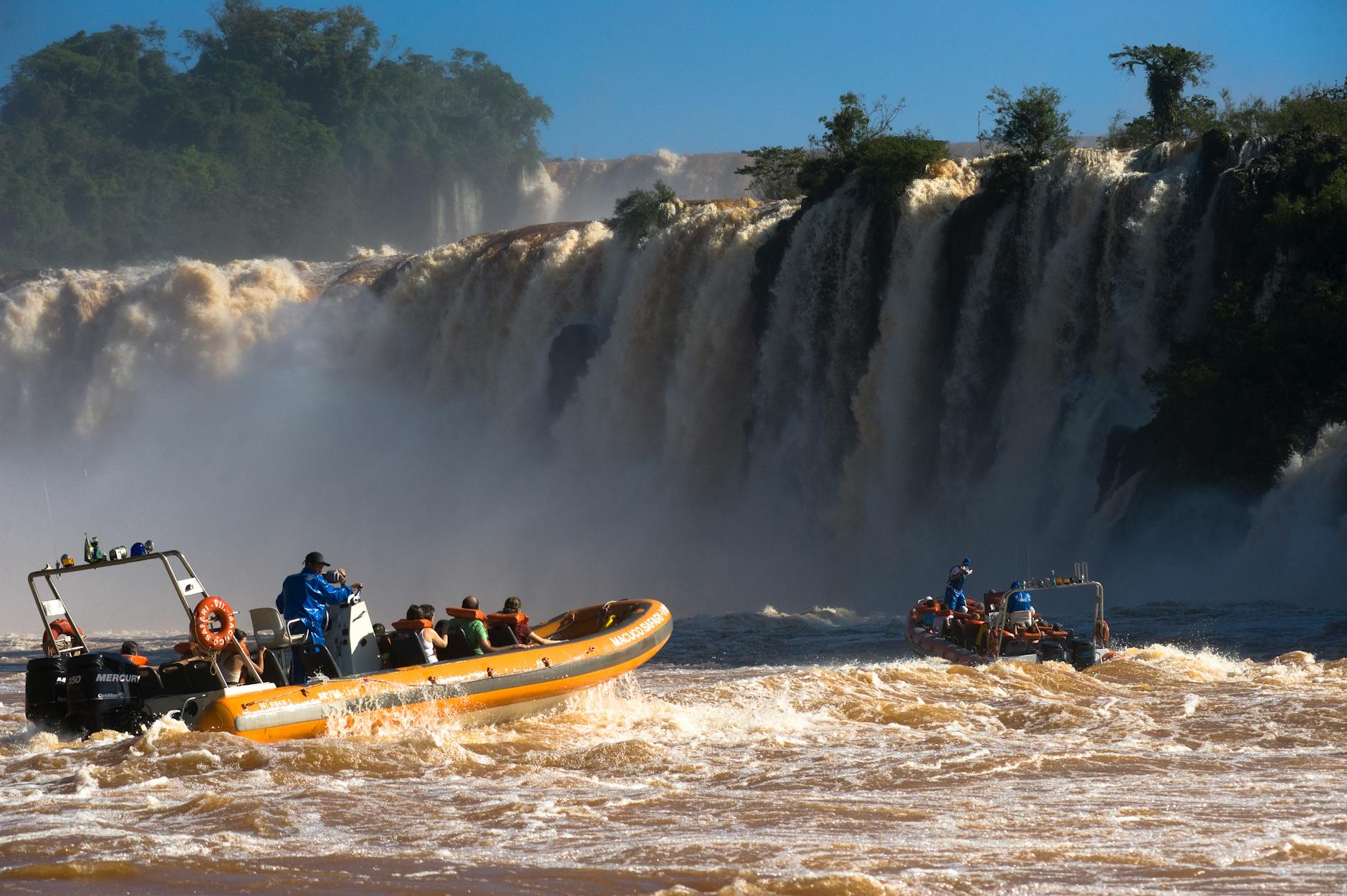
The Gran Aventura jungle-boat under the falls
Join the operated adventure for a truck ride through the rainforest followed by a fast inflatable boat that powers right up under the cascades, so you get soaked.
Day 7: Fly Iguazú → El Calafate & Patagonia
Puerto Iguazú → El Calafate — a long travel day, usually connecting through Buenos Aires
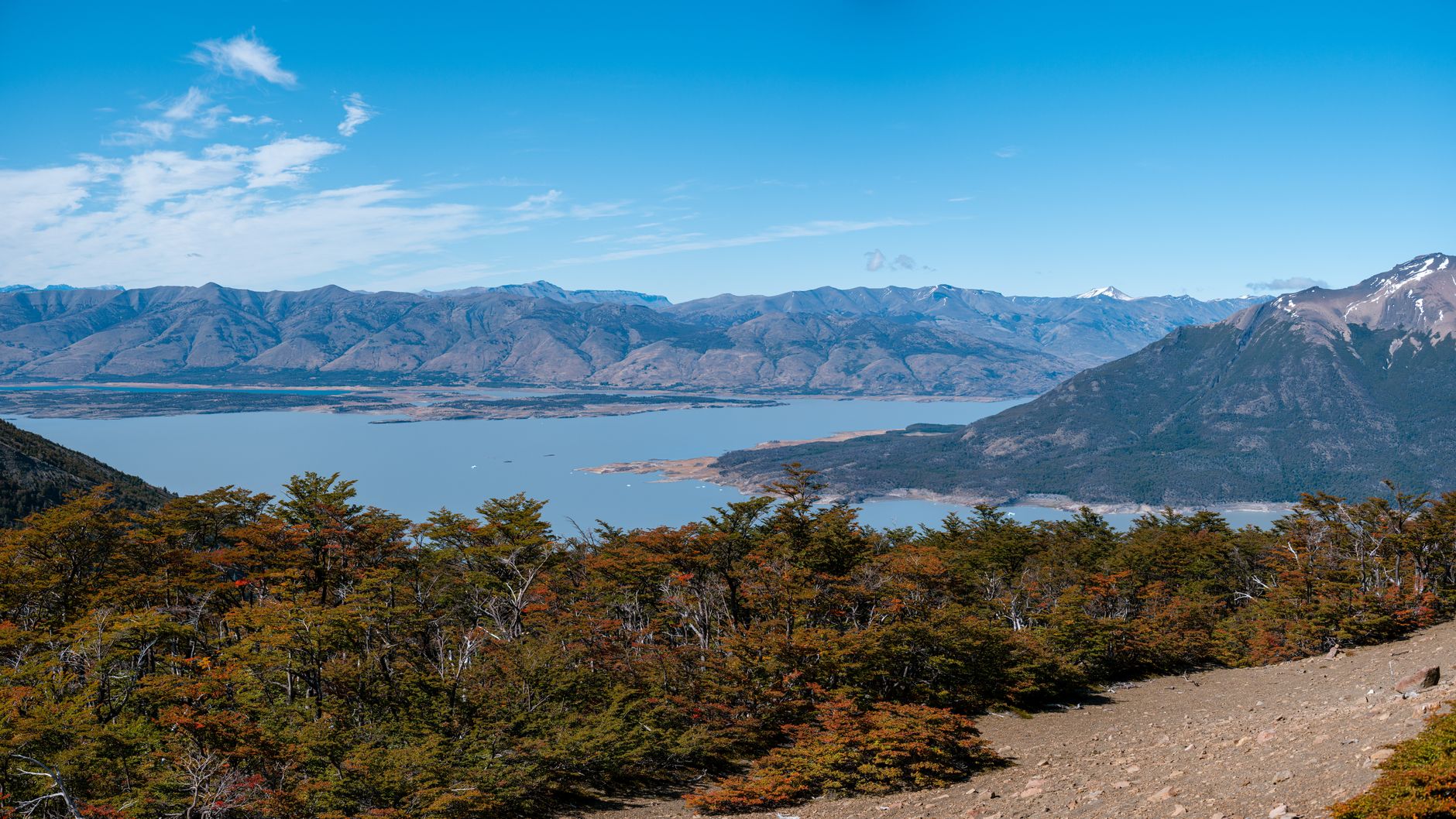
Fly to El Calafate
Make the long hop from the subtropics to the far south, with most routes connecting through Buenos Aires. Arrive into El Calafate on the shore of Lago Argentino, gateway to Los Glaciares National Park.
Lago Argentino & the town of El Calafate
Spend a free afternoon by the huge glacial lake, strolling the town and easing into Patagonia after the long travel day, with the mountains and the ice fields waiting to the west.
Day 8: El Calafate — Laguna Nimez & the Glaciarium
An easy acclimatise day: a wetland bird reserve and the ice museum

Laguna Nimez bird reserve
Take a gentle, flat first day in Patagonia at this municipal wetland reserve on the edge of town, about a kilometre from the centre. A ticketed circular boardwalk (roughly two to three hours) loops past observation decks where flamingos, upland geese, ducks and grebes gather on Lago Argentino's shore. Open daily, year-round.
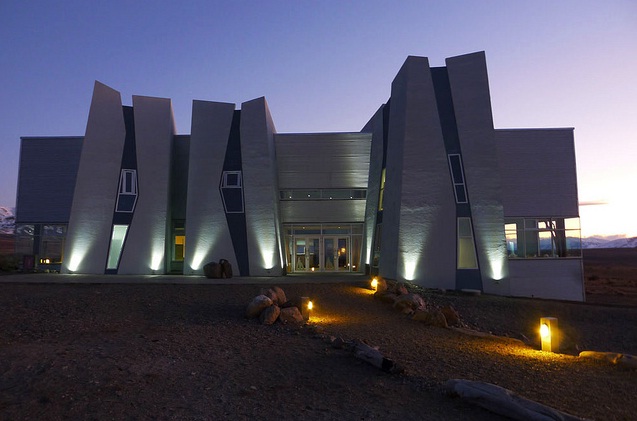
The Glaciarium ice museum
Prime yourself for the glaciers at this modern museum on the road out of town, its jagged white facade echoing the seracs of the ice fields. Ticketed exhibits explain how the Southern Patagonian Ice Field and Perito Moreno work, and there's the sub-zero "Glaciobar" made of ice. Open year-round.
Day 9: Los Glaciares National Park — the Perito Moreno Glacier
El Calafate → Perito Moreno — boardwalks and an optional guided glacier experience

The Perito Moreno Glacier boardwalks
Walk the ticketed national-park balconies facing the calving front of the Perito Moreno Glacier across the channel, and wait for slabs of ice to crash into the lake.
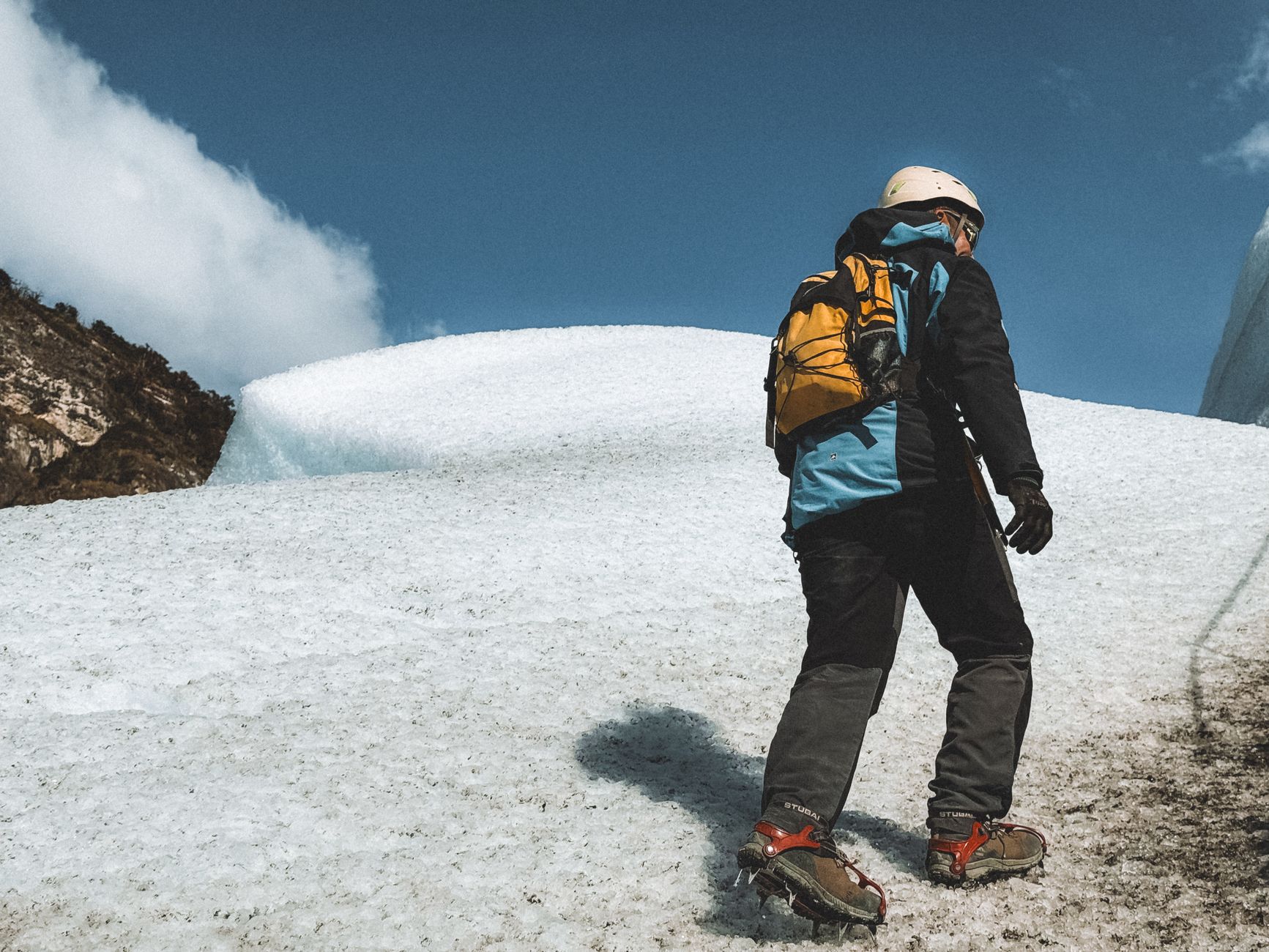
A Perito Moreno boat safari or mini-trekking
Choose an operated boat safari that noses up to the towering ice face, or a guided mini-trekking walk that straps crampons on your boots for a walk out onto the glacier itself.
Day 10: To El Chaltén, Argentina's trekking capital
El Calafate → El Chaltén — a road transfer and first views of Fitz Roy

Drive to El Chaltén
Follow the paved road from El Calafate along Lago Argentino and Lago Viedma for a few hours to El Chaltén, the small village at the foot of the Fitz Roy massif inside Los Glaciares National Park.
First views of the Fitz Roy massif
Absorb the first view of the granite spires as you ease into the trekking hub; the El Chaltén sector of Los Glaciares National Park now charges a park-entry fee for its trails, so check the official park site for current tickets before you set off tomorrow.
Day 11: El Chaltén — an easy warm-up before the big hike
A short waterfall walk and a gentle viewpoint to scout tomorrow's climb

Chorrillo del Salto waterfall walk
Warm the legs up with this short, almost flat trail from the edge of El Chaltén to a roughly 20-metre waterfall dropping into a rocky pool — about a 6 km round trip on foot, or a quick 1 km if you drive to the trailhead. It's the classic first-afternoon or rest-day walk between the big treks, and it's free (inside Los Glaciares National Park).
Mirador de los Cóndores
Finish with the short, gentle climb from the park office to the Mirador de los Cóndores and Mirador de las Águilas viewpoints, looking back over El Chaltén, the Río de las Vueltas valley and — on a clear day — Fitz Roy and Cerro Torre, often with condors overhead. A free, easy way to scout tomorrow's big hike.
Day 12: El Chaltén — the Laguna de los Tres hike to Fitz Roy
A strenuous mountain day followed by rest in the village
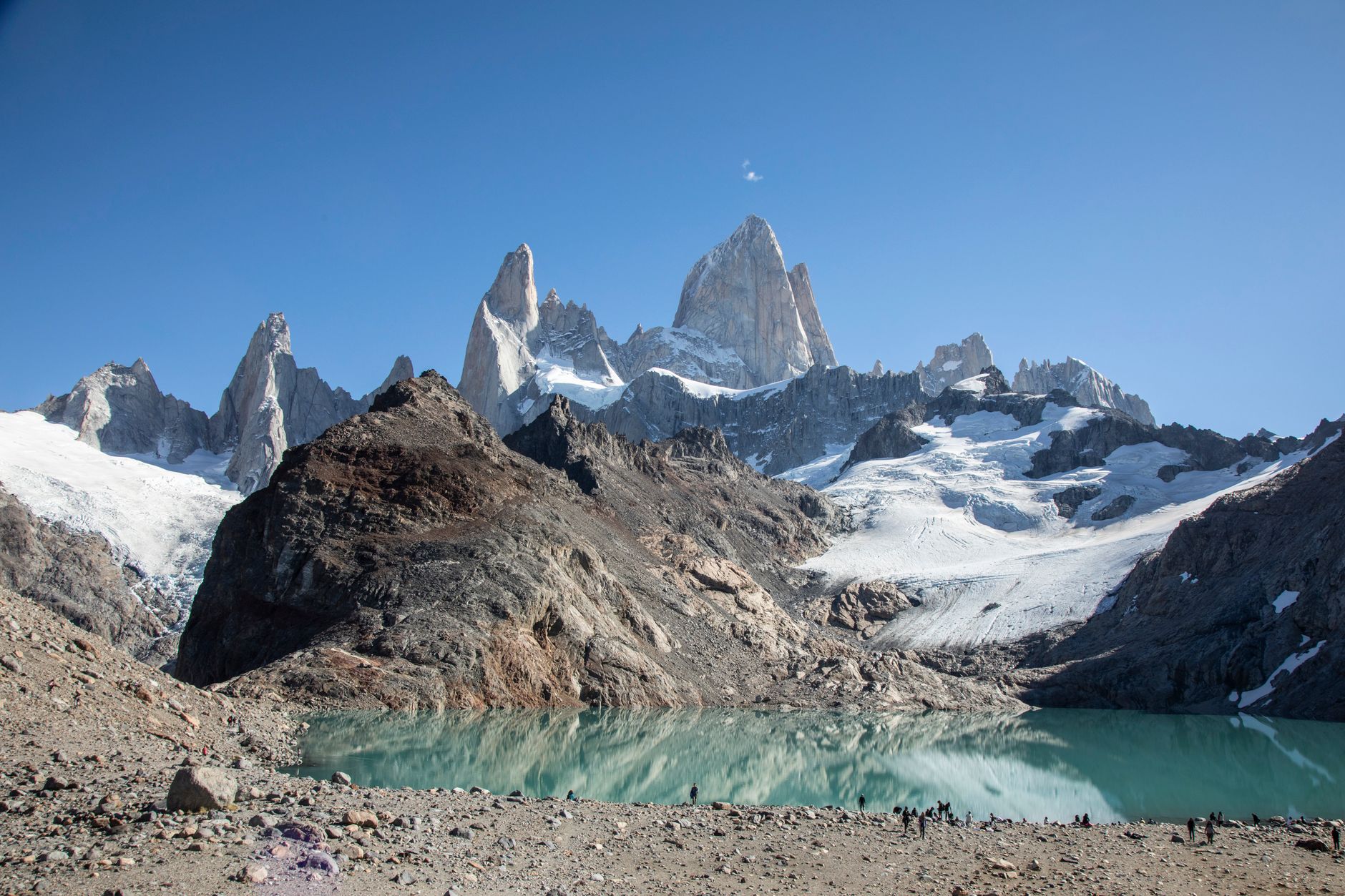
The Laguna de los Tres hike
Take the strenuous full-day hike from El Chaltén up to the turquoise glacial lake beneath Fitz Roy; the El Chaltén sector of Los Glaciares National Park now charges a park-entry fee for this trail, so check the official park site for current tickets. The final climb to the lake is steep and exposed, so start early and turn back in bad weather.
Rest, refuel & recover in the village
Back in El Chaltén, soak sore legs and eat well after the big day. There is no rush tomorrow — you reposition gently toward El Calafate — so confirm your onward transfer time and enjoy a slow evening in the village.
Day 13: Rest & reposition to El Calafate
A slow last El Chaltén morning, then a road transfer to overnight near the airport
An easy last El Chaltén morning
Take a slow morning in the village — a lie-in, a bakery breakfast, a last look at the massif or a short riverside stroll — before the road south. No big miles today; this is a recovery-and-buffer day that protects your flight home.
Transfer to El Calafate & overnight near the airport
Make the road transfer back to El Calafate and stay near the airport, so tomorrow's early departure has no long drive attached. In high season, re-confirm your flight and pre-arrange the morning airport transfer.
Day 14: Fly El Calafate → Buenos Aires & depart
A fully text-only transfer and departure day with no master image
Fly from El Calafate toward Buenos Aires
Take the short airport transfer from your El Calafate hotel and fly north; most international departures leave from Buenos Aires Ezeiza, so allow time for the connection.
Depart from Buenos Aires
Connect at Aeroparque or Ezeiza for your flight home, leaving a generous buffer between the domestic arrival and the international departure, which often use different airports in Buenos Aires.
Buenos Aires to Iguazú Falls and Patagonia
Eleven visual-day anchors trace the route through Buenos Aires and its polo day, north to Iguazú, and south to El Calafate, the Perito Moreno Glacier, El Chaltén and Laguna de los Tres; the reposition and departure days are text-only.
- 1
Buenos Aires — Plaza de Mayo / Casa Rosada
The historic centre and the pink presidential palace
- 2
Buenos Aires — Recoleta Cemetery
Marble mausoleums and Eva Perón's tomb
- 3
Buenos Aires — Teatro Colón
A guided tour of the gilded opera house
- 4
Buenos Aires — a polo day
The thundering national sport on a Palermo day-trip
- 5
Iguazú National Park — circuits
The upper and lower boardwalk circuits
- 6
Iguazú — Devil's Throat
The catwalk to the roaring horseshoe falls
- 7
El Calafate — Lago Argentino
The Patagonian gateway on the huge glacial lake
- 8
El Calafate — Laguna Nimez reserve
A gentle wetland walk among flamingos and geese
- 9
Los Glaciares — Perito Moreno Glacier
Boardwalk views across the glacier's calving front
- 10
El Chaltén — Fitz Roy views
The trekking village beneath the granite massif
- 11
El Chaltén — Chorrillo del Salto
An easy waterfall warm-up walk from the village
- 12
El Chaltén — Laguna de los Tres
The strenuous climb to the glacial lake below Fitz Roy
Frequently Asked Questions
How many days do you need for Argentina?
About ten days covers the classic trio — Buenos Aires, the Iguazú Falls and Patagonia — but a fourteen-day trip like this one adds a Buenos Aires polo day and builds in rest, acclimatisation and weather buffers in Patagonia, so nothing feels rushed. With less time, pick two of the three rather than hurrying all of it.
What is the best time to visit Argentina?
It depends on the region. Patagonia is best in the southern summer, roughly November to March, when the trails are open and days are long, while Buenos Aires is pleasant in spring and autumn and Iguazú is warm and green year-round.
Do I need to fly between the regions?
Yes. Argentina is a very large country, so this itinerary relies on internal flights from Buenos Aires up to Puerto Iguazú and down to El Calafate; driving the whole way would take far longer than fourteen days.
Can I watch polo in Buenos Aires, and when?
Yes. The Argentine Open — the world's most prestigious polo tournament, contested every year since 1893 at the Campo Argentino de Polo in Palermo, known as the "Cathedral of Polo" — runs across November into December. Outside that window, year-round estancia polo day-trips let you watch a match, take a beginner lesson and share an asado lunch. A polo field is the largest in organized sport, roughly 300 by 160 yards — about nine American football fields.
Is the Perito Moreno Glacier worth it, and can you walk on it?
Yes. The national-park boardwalks face the calving ice front, and licensed operators run boat safaris and guided mini-trekking that put crampons on your boots to walk out onto the glacier; book the guided options in advance.
How hard is the Laguna de los Tres hike to Fitz Roy?
It is a long, strenuous full-day hike from El Chaltén, and the final climb to the lake is steep and exposed over loose rock. Start early, carry food, water and layers, and turn back in bad weather or high wind. This itinerary gives you an easy warm-up day beforehand so your legs are ready.
Which side of the Iguazú Falls should I visit?
This itinerary focuses on the Argentine side, which has the most trails — the upper and lower circuits and the long catwalk to the Devil's Throat — plus the Gran Aventura jungle-boat. The Brazilian side offers the wide panorama and can be added if you have an extra day and the right visa.
Do I need a visa for Argentina?
Many nationalities can enter Argentina visa-free for tourism, but rules vary by passport. Check the official requirements before you travel, and remember an onward Brazil day trip at Iguazú may need a separate visa.
What should I pack for Patagonia?
Pack layers for fast-changing weather — a warm mid-layer, a waterproof and windproof shell, gloves and a hat even in summer, plus sturdy broken-in boots, sun protection and enough water, as the wind and sun in Patagonia are both strong.
Is Argentina a good first trip to South America?
Yes. It combines a great cosmopolitan city, one of the world's most spectacular waterfalls and the ice and peaks of Patagonia, and a fourteen-day loop with a few internal flights and some advance booking is very doable and never rushed.
Make this plan your own
Copy this plan into your account in one click — keep the original for reference and edit your copy any way you like.
Sign in once to save and edit your own copy.